
.png)
Why Does Metallic Shiny Effect Glitter Powder Behave Differently on Skin vs Resin Surfaces?

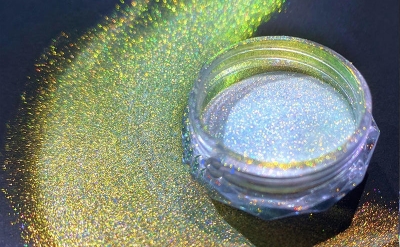
In the beauty and craft industry, metallic shiny effect glitter powder creates strong reflective and metallic visuals. However, users often notice different results when they apply it to skin versus resin surfaces. Therefore, many people ask why the same product shows different effects. In simple terms, surface type controls how light reflects. Moreover, Xucai develops stable decorative powders that maintain consistent particle quality. However, surface conditions still affect final visual performance.
Surface Texture and Reflection Behavior
Skin has a soft and flexible texture. In contrast, resin has a hard and smooth surface. Therefore, light behaves very differently on these two materials. On resin, metallic shiny effect glitter powder reflects light in a controlled direction. As a result, it creates a strong mirror-like shine. Moreover, the smooth resin surface helps particles stay evenly aligned. However, the skin surface is uneven and constantly moving. Therefore, light scatters in multiple directions. As a result, it appears softer and less reflective on the skin. Nevertheless, this does not reduce product quality. It only reflects natural surface differences.
Adhesive Layers and Application Medium
Moreover, the binding medium also plays a key role. Resin cures into a solid structure. Therefore, it locks glitter particles in fixed positions. In contrast, skin applications use gel, adhesive, or cosmetic base layers. These materials stay flexible. As a result, particles cannot stay fully aligned. Therefore, metallic shiny effect glitter powder shows stronger reflection on resin. However, it produces a softer metallic effect on the skin. In addition, Xucai ensures fine particle consistency to improve application stability across different uses.
Particle Movement and Light Diffusion
Furthermore, particle alignment directly affects shine intensity. On resin, particles settle evenly during curing. Therefore, they create a stable reflective surface. However, on the skin, movement changes alignment constantly. As a result, light spreads in different directions. Therefore, metallic shiny effect glitter powder looks more dynamic but less concentrated on the skin. In addition, lighting conditions also influence the final effect. Strong directional light enhances metallic shine. However, diffused light reduces reflection intensity.
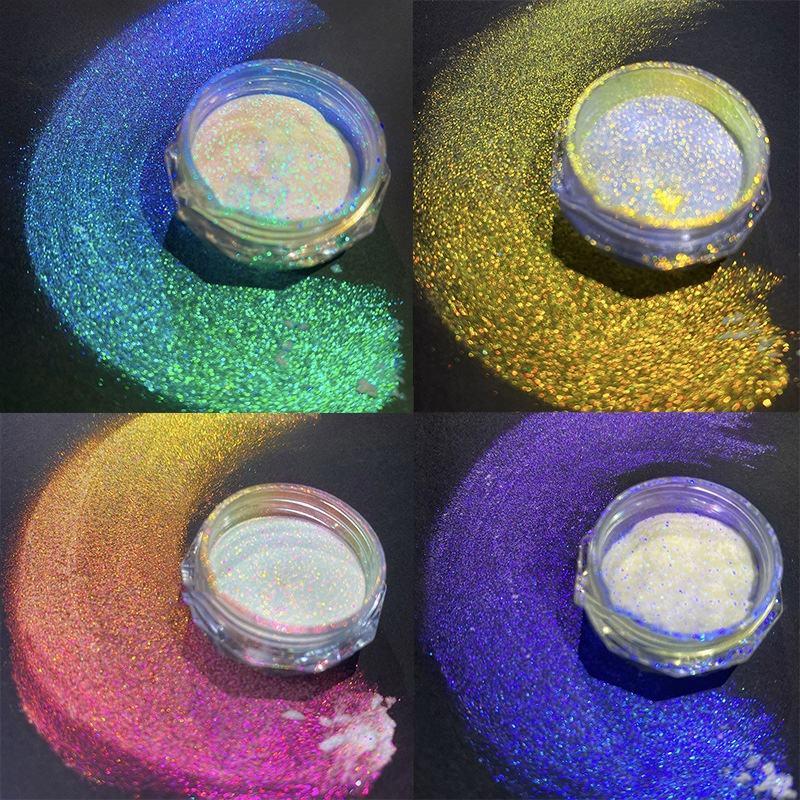
Environmental Conditions and Visual Differences
Moreover, environmental factors also play an important role. Resin applications usually happen under controlled lighting. Therefore, the metallic effect appears stronger and more consistent. In contrast, skin applications happen in real environments. Therefore, lighting, temperature, and moisture all affect performance. As a result, metallic shiny effect glitter powder behaves more consistently on resin than on skin. Nevertheless, both applications still create attractive visual results in different ways.
Conclusion: Same Product, Different Surface Behavior
In conclusion, metallic shiny effect glitter powder behaves differently because surface structure, adhesive medium, and lighting conditions all change how light reflects. Therefore, resin produces stronger metallic reflection, while skin creates softer diffusion. Moreover, Xucai focuses on stable particle design and consistent coating technology. As a result, users can achieve reliable performance across both cosmetic and craft applications.