
Trial the actual process.
Record the binder, dose, application method and drying or curing cycle. Check dispersion or surface coverage, colour change, adhesion and particle release using criteria suited to the finished product.

Glitter sustainability
The sparkle is visible.
The choices behind it matter, too.
From a beautiful finish to an informed decision
A material choice only makes sense in the context of the whole product.
How will the glitter be applied? What must it withstand in use? Which environmental property is required—and what evidence supports it? These questions help turn an idea into a workable specification.
We offer plant-fiber, PLA and PET directions, with different development considerations. Explore the materials and the supplied reports, then review the grade that fits your brief.
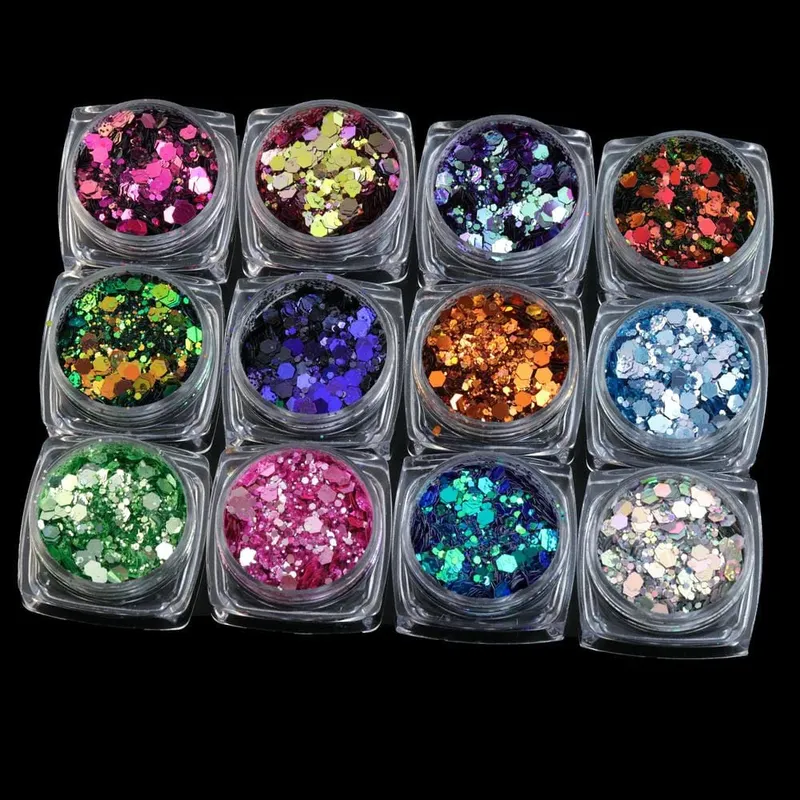
Browse the glitter library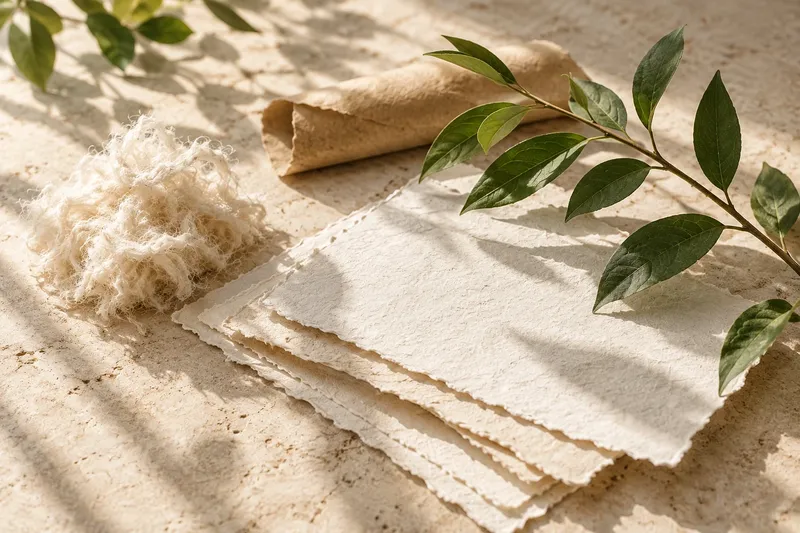
Look at the complete glitter
The substrate is one part of the specification. The decorative layers and the finished application belong in the same conversation.
Identify the base film or fiber and the exact material grade.
Include the coating system, colourants and any other decorative layers.
Review the binder, base material and end-use conditions. Evidence for loose glitter does not establish the performance of the combined article.
Three material directions
Start with the finished article. Compare the complete material, the demands of your process and the evidence your market requires.
Explore this series when your project calls for a plant-fiber substrate and a documented sample biodegradation test. Agree the exact colour, coating and cut before transferring a report into your specification.
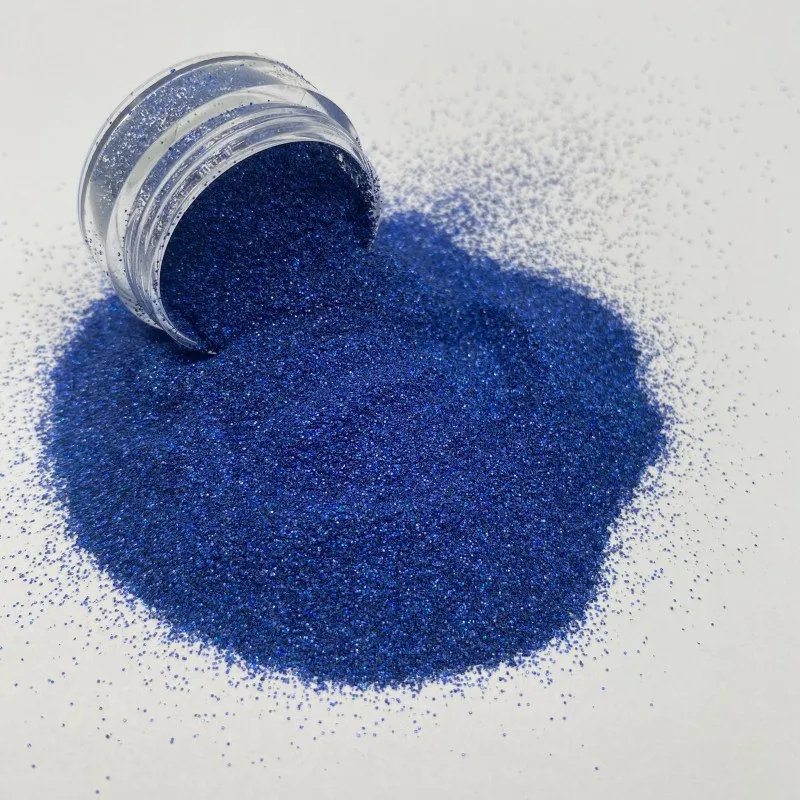
PLA is a polylactic-acid-based material. Review the complete glitter, including its coatings and colourants, when choosing a grade or assessing an environmental claim.
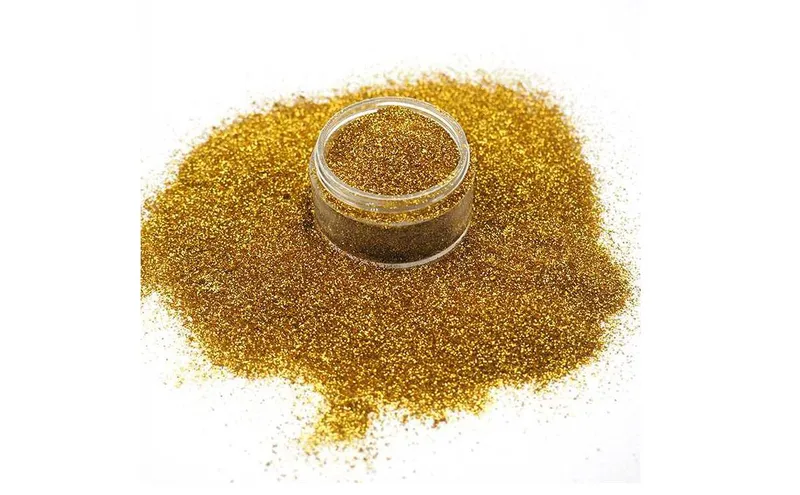
PET glitter uses a polyester-film substrate. Material selection starts with the required visual effect and the demands of the finished product, alongside handling and disposal considerations.
Design for use. Plan what follows.
A finish needs to work for its intended life. The conditions you specify determine what to test.
Record the binder, dose, application method and drying or curing cycle. Check dispersion or surface coverage, colour change, adhesion and particle release using criteria suited to the finished product.
Consider handling, rubbing, humidity, cleaning and any expected water contact. A dry decorative paper and a repeatedly cleaned surface do not present the same development brief.
Specify the whole article and the available local collection or disposal system. Do not assume that changing the glitter substrate makes a mixed-material article recyclable or compostable.
One result. Its stated conditions.
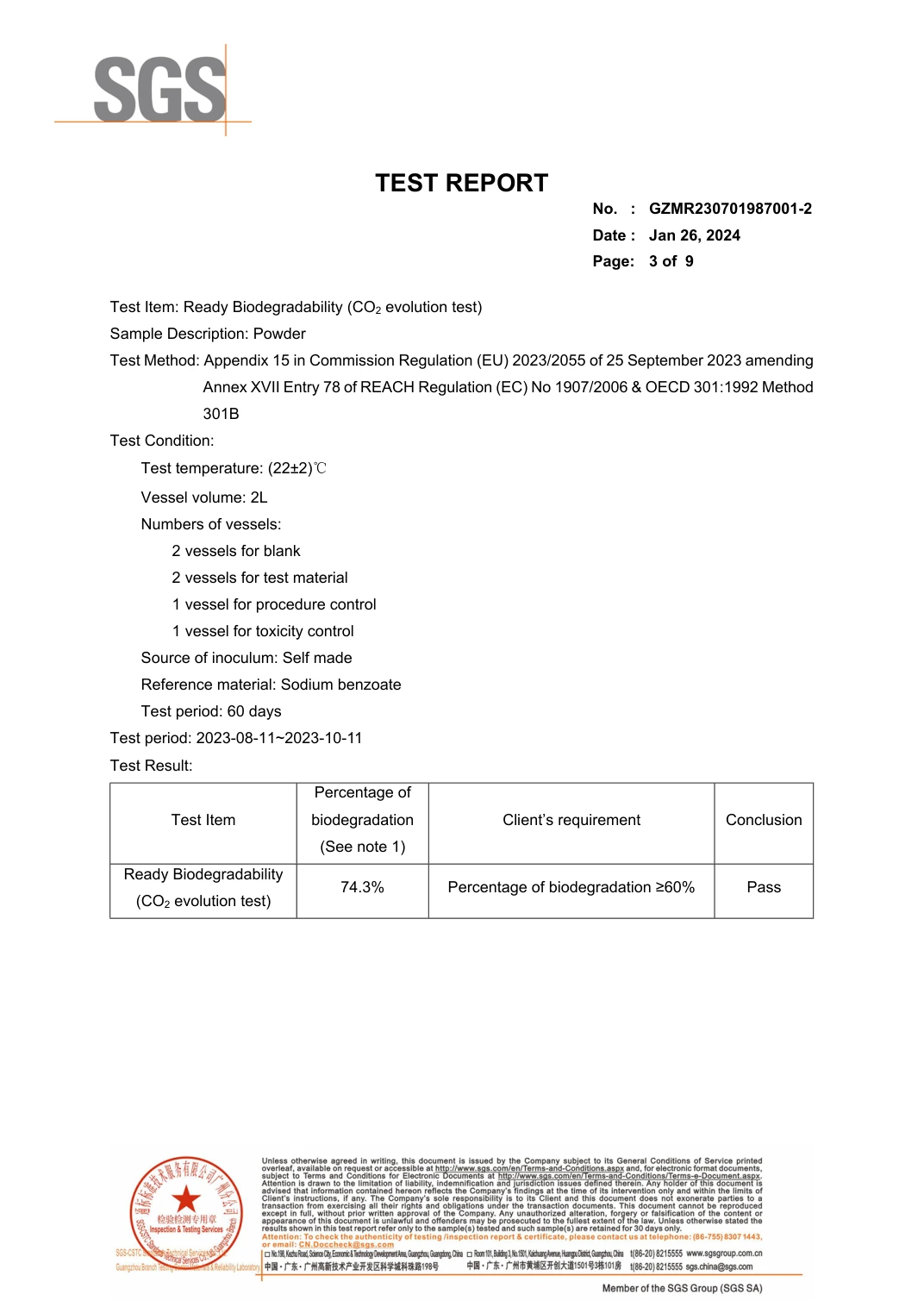
The supplied SGS report documents a CO₂ evolution test on the submitted water-degradable glitter sample.
Its sample photograph identifies plant-fiber glitter, specification 1/96. Confirm that the grade you are considering matches this identity.
Read the original test report74.3%
Recorded biodegradation
The report records Pass against the client’s ≥60% requirement. This is a sample-specific laboratory result, not proof of marine or home-compost performance, or a blanket regulatory exemption.
Available documentation
Read the sample identity, method, date and result together. These supplied records relate to the water-degradable plant-fiber series; their scopes are different.
 View original
Biodegradation test report ·
A documented CO₂ evolution test for the submitted water-degradable glitter sample.
Sample scope. The sample photograph identifies plant-fiber degradable glitter, specification 1/96. Match the purchased grade to this report.
Recorded result. 74.3% biodegradation after 60 days at 22 ± 2°C. The report records Pass against the client requirement of at least 60%.
Method. OECD 301:1992, Method 301B — CO₂ evolution test; The report also cites Appendix 15 of Commission Regulation (EU) 2023/2055
This result belongs to the tested sample and stated laboratory conditions. It does not establish marine or home-compost performance, or a blanket regulatory exemption.
Dated sample report; no expiry date is stated. Confirm the selected grade and the current requirements before ordering.
 View original
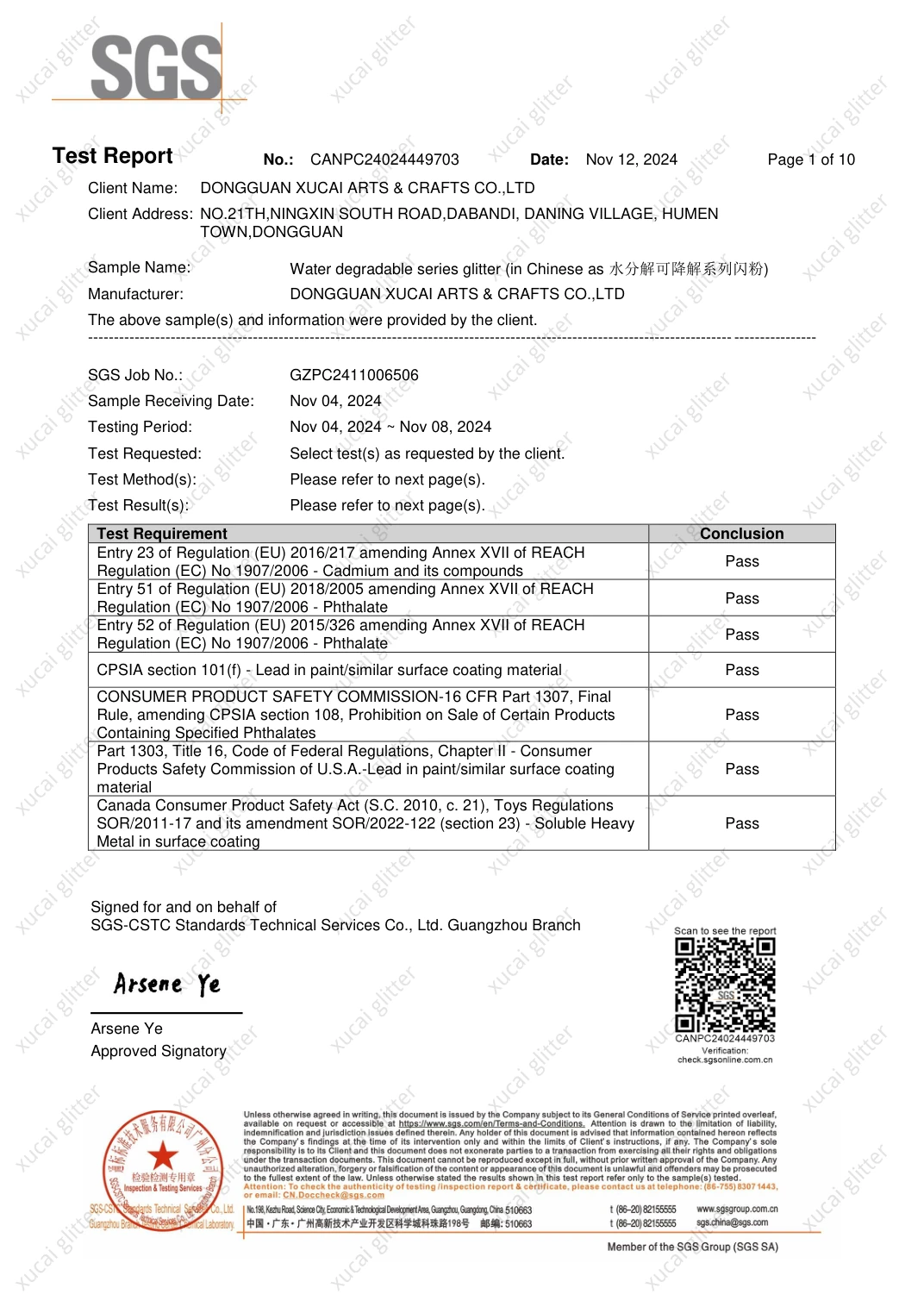
Chemical test report ·
Selected chemical tests for XUCAI’s submitted water-degradable series sample.
Sample scope. Submitted multi-colour powder, sample 002, SGS sample ID CAN24-0244497-0001.C002.
Recorded result. The listed cadmium, restricted-phthalate, lead and element-migration requirements are marked Pass. Additional phthalate measurements are listed as See Results.
Method. REACH Annex XVII: selected cadmium and phthalate requirements; EN 71-3:2019+A1:2021: migration of certain elements; CPSIA / 16 CFR: selected lead and phthalate requirements; ISO 8124-3:2020/Amd.1:2023: migration of certain elements; ASTM F963-23: selected surface-coating requirements
Selected material tests do not certify the finished packaging, toy or cosmetic. Review the exact test scope, colour and grade against the intended use.
Dated sample report; no expiry date is stated. Confirm the selected grade and the current requirements before ordering.
 View original
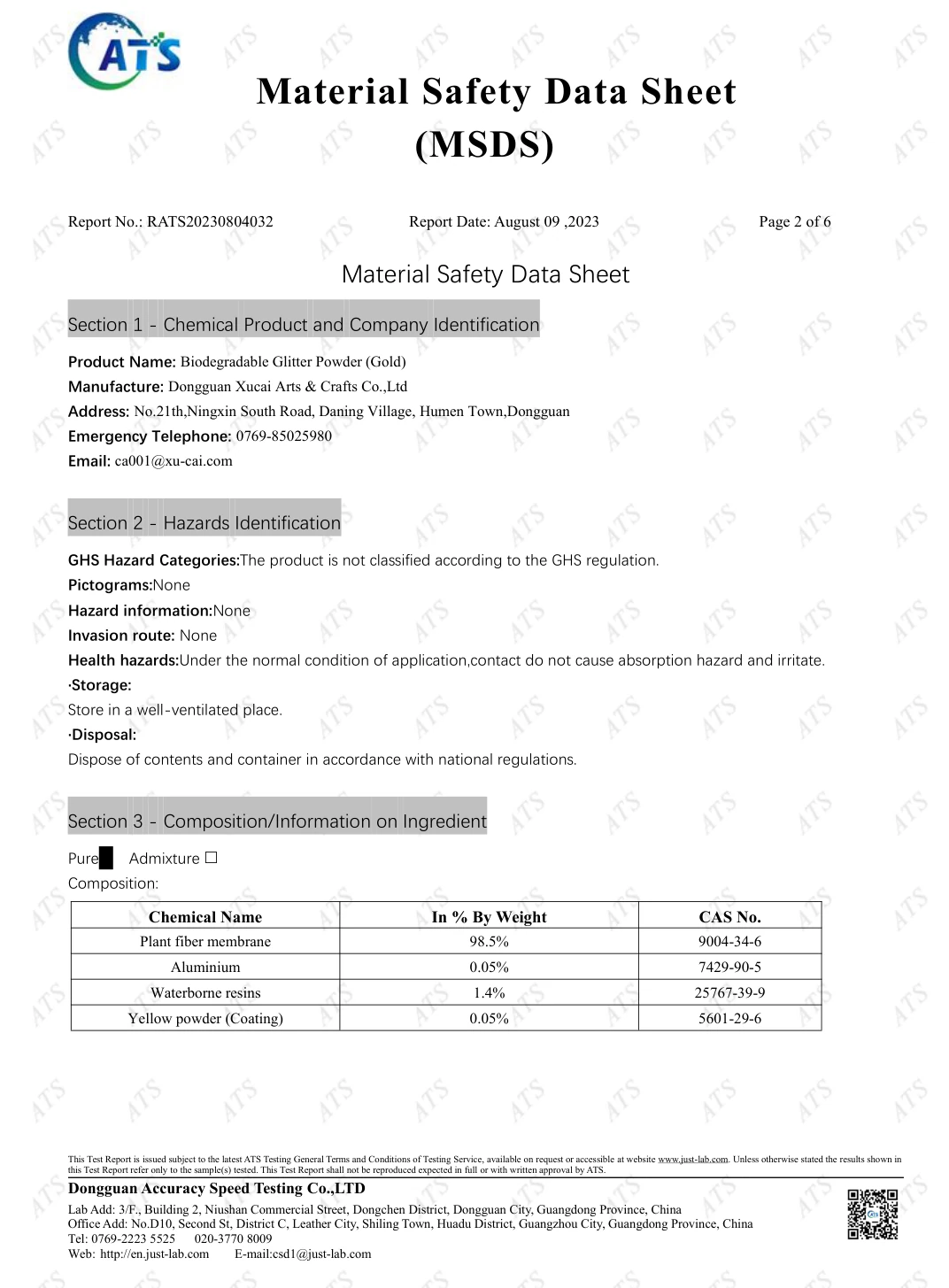
Safety data sheet ·
Composition, handling, storage and safety information for the named gold glitter sample.
Sample scope. Report date 9 August 2023; the document also lists an issue date of 8 August 2023. Match the current product composition before use.
Recorded result. The declared composition is 98.5% plant-fiber membrane, 1.4% waterborne resins, 0.05% aluminium and 0.05% yellow coating powder.
Method. Prepared with reference to UN GHS Rev.9 and EU CLP Regulation (EC) No 1272/2008
An SDS is a safety-information document, not independent proof of compostability or cosmetic suitability. The composition is specific to the named gold sample.
Dated sample report; no expiry date is stated. Confirm the selected grade and the current requirements before ordering.
A test report records a result for a submitted sample. An SDS or MSDS provides safety information. Neither should be presented as a certification of every colour, series or finished product.
A shared vocabulary
Feedstock origin, biodegradation and composting describe different properties. Keep the evidence beside the wording.
Where the feedstock comes from.
Biological origin does not by itself establish biodegradability or compostability.
What happens under defined conditions.
The environment, test method, duration and measured result all belong with the claim.
A defined composting requirement.
Industrial-composting evidence does not establish home-compost performance.
A series description to investigate.
Visible dispersal or disintegration alone is not proof of complete biodegradation.
Terminology reference: European Commission — bio-based, biodegradable and compostable plastics.
In the workshop
Build material control into sampling, production and storage—not only the finished-product brief.
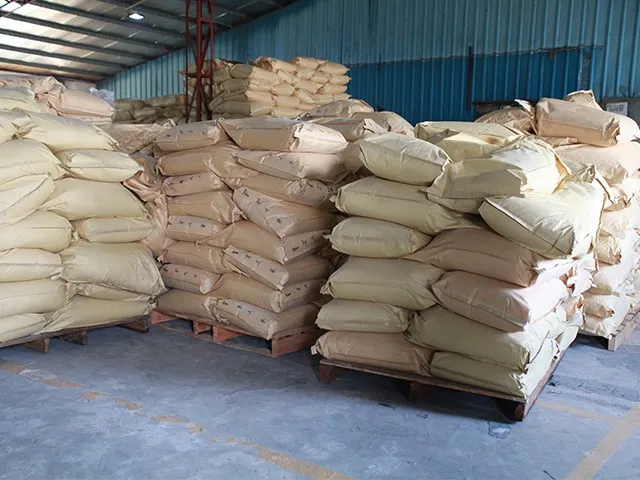
Use collection trays and appropriate extraction where the process requires it. Keep containers closed between uses, collect loose residue and use the appropriate local waste route. Avoid rinsing glitter into drains.
The manufacturer’s October 2023 note recommends applying a quick-drying base adhesive first, then sprinkling, spraying or attaching this water-degradable series. It advises against premixing into oils, glues or binders and states that the series is not solvent-, acid- or alkali-resistant.
For the described plant-fiber series, the dated note recommends approximately 60°C and a maximum of 80°C. Confirm the current grade and actual exposure time, then trial any water-based adhesive system before production.
Keep the described plant-fiber series cool, dry and away from sunlight and moisture. The same note gives a best-use period of 6–8 months and a maximum of 12 months with suitable storage. Request batch-specific guidance when ordering.
Processing and storage values above come from the supplied October 2023 water-degradable series note. They do not apply automatically to PET, PLA or another grade.
Bring the right information to the table
Describe the product first. We can then discuss the grade, sample trial and relevant documents around it.
Discuss your material briefSubstrate, colour, coating, particle dimensions and the required visual effect.
Base formulation, application method, drying conditions and expected use.
Exact proposed wording, destination market, intended disposal route and customer test requirements.
Retain the accepted sample, agreed specification and matching report references. Recheck relevance when the grade or formulation changes.
Material questions
No. They are separate material directions in the XUCAI collection. Request the complete composition and relevant documents for the selected grade. A test on the water-degradable plant-fiber series cannot be applied to the PLA collection.
Trial the actual system. The manufacturer’s guidance is to apply a suitable quick-drying base adhesive first, then sprinkle, spray or attach the glitter. It advises against premixing this water-degradable series into oils, glues or binders. A water-based formulation still needs compatibility testing.
No. The recorded result belongs to the submitted sample, the stated method and laboratory conditions. It does not establish marine degradation, home compostability or performance in every outdoor environment. Do not release loose glitter into the environment.
Review the exact product composition, intended use, destination requirements and appropriate evidence with your technical team. The reports on this page are not a blanket certification or regulatory conclusion for every glitter grade or finished product.
First check whether the proposed grade, coating, colour and cut match the tested sample. Changes in material or finished-product formulation may require additional evidence. Keep the approved sample reference, report numbers and specification together.
Send the intended product, destination market and proposed claim, plus your colour, particle size, binder or base formulation, processing temperature and exposure time. Include expected use conditions, the intended disposal route and any customer test specification.
For European market review, consult the EU restriction on synthetic polymer microparticles against the exact material and use. Related records: quality & documentation.